Answer fast, in the candidate's own words.(note 1)
november listens to the race, drafts responses from what the candidate has actually said, and puts every public word in front of a person before it goes out. Campaigns that trust each other share what they make, each through its own approvals.
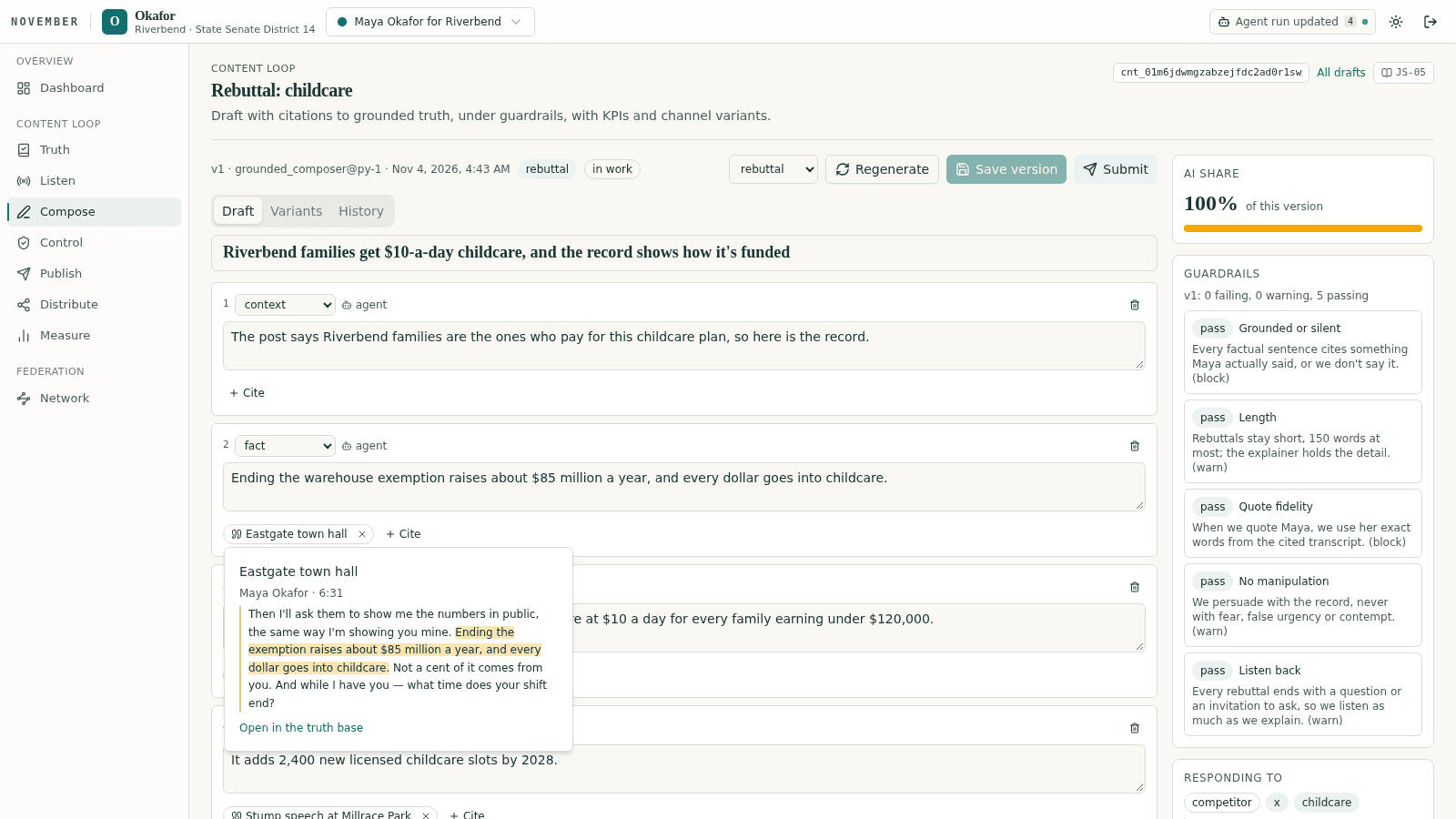
1Every public claim november drafts cites the speech or meeting it came from. When the record is silent, so is november.
The hour after an attack decides the story
Most campaigns lose it the same three ways.
Answers come late and off-message
By the time a reply is drafted, checked and signed off, the attack has had the day. The version that finally goes out often says something the candidate never has.
Volunteers improvise
Door-knockers get the hard question on the porch and answer from memory. Supporters post whatever they could find. Nobody gave them the campaign's words.
Nobody can show where a claim came from
When a reporter asks for the source of a line, someone searches old speeches by hand. Sometimes there is no source at all.
How it works: one loop, from the record to the doorstep and back
Eight steps. Agents do the reading, drafting and checking in between; people decide at every step that matters.
Ground
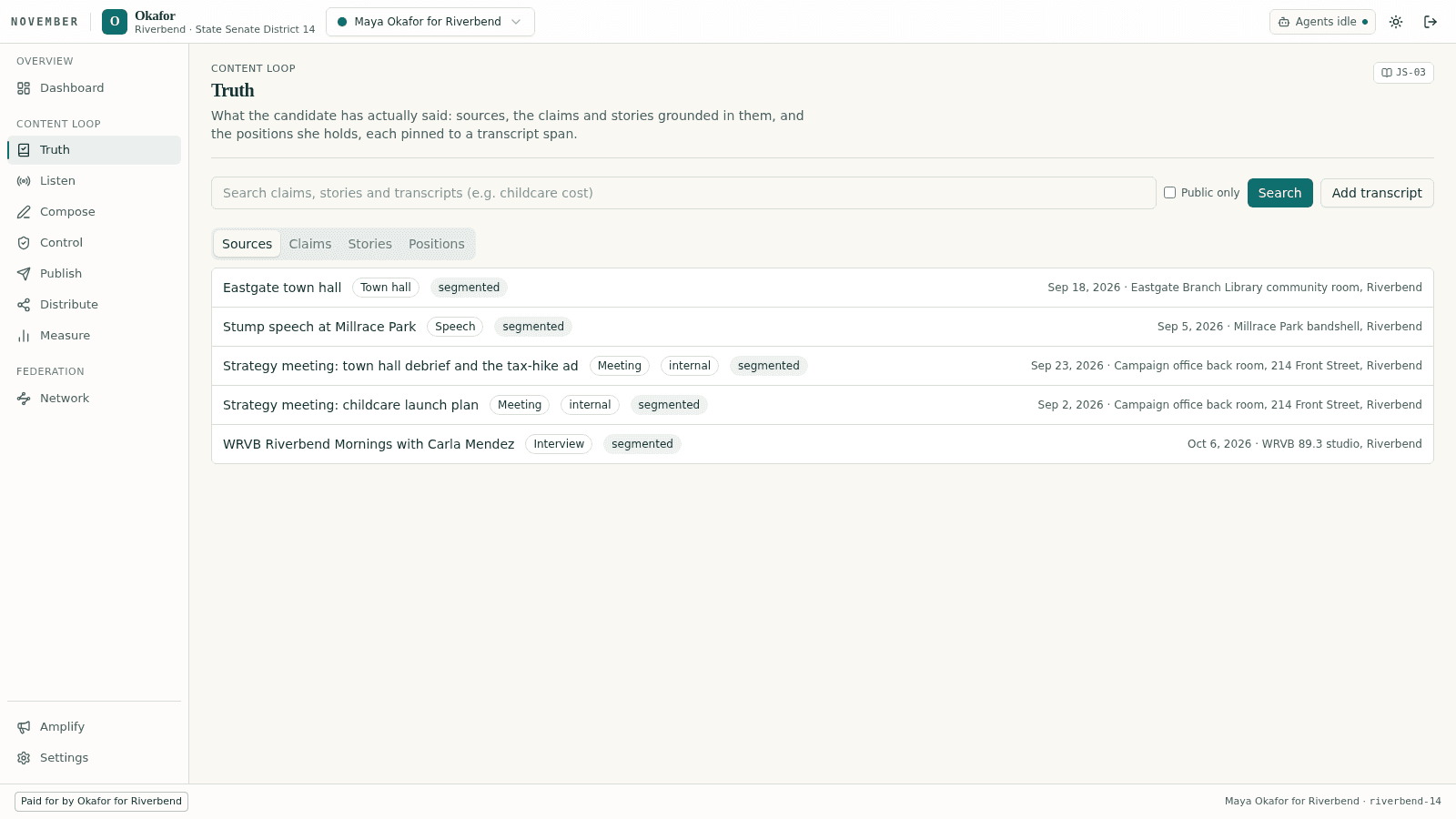
Load speeches, town halls, interviews and meetings. november keeps the candidate's claims, stories and positions, each pinned to the moment she said it.
Listen
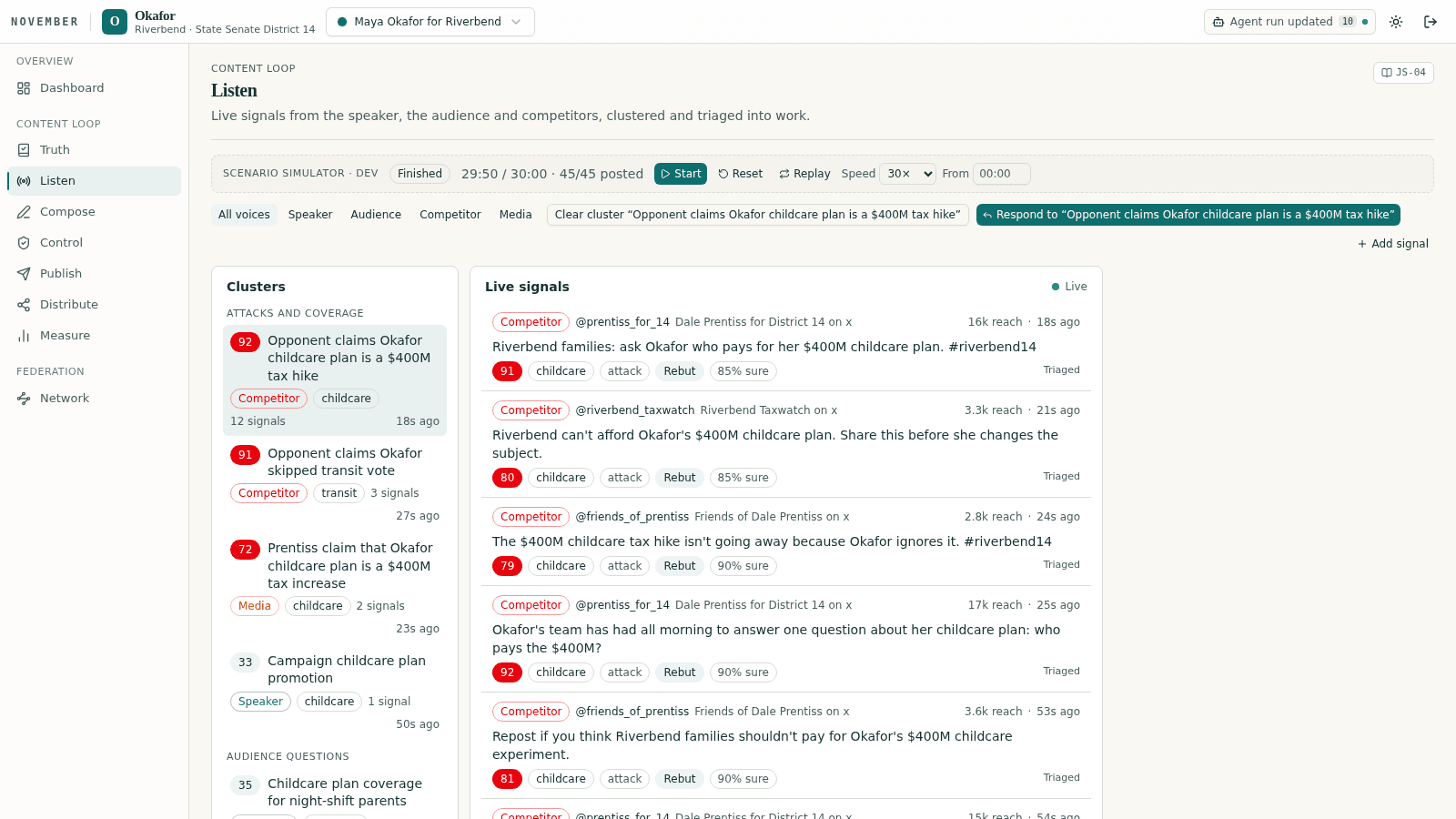
Signals from the candidate, the audience and opponents arrive clustered and ranked, so the attack that matters sits at the top.
Respond
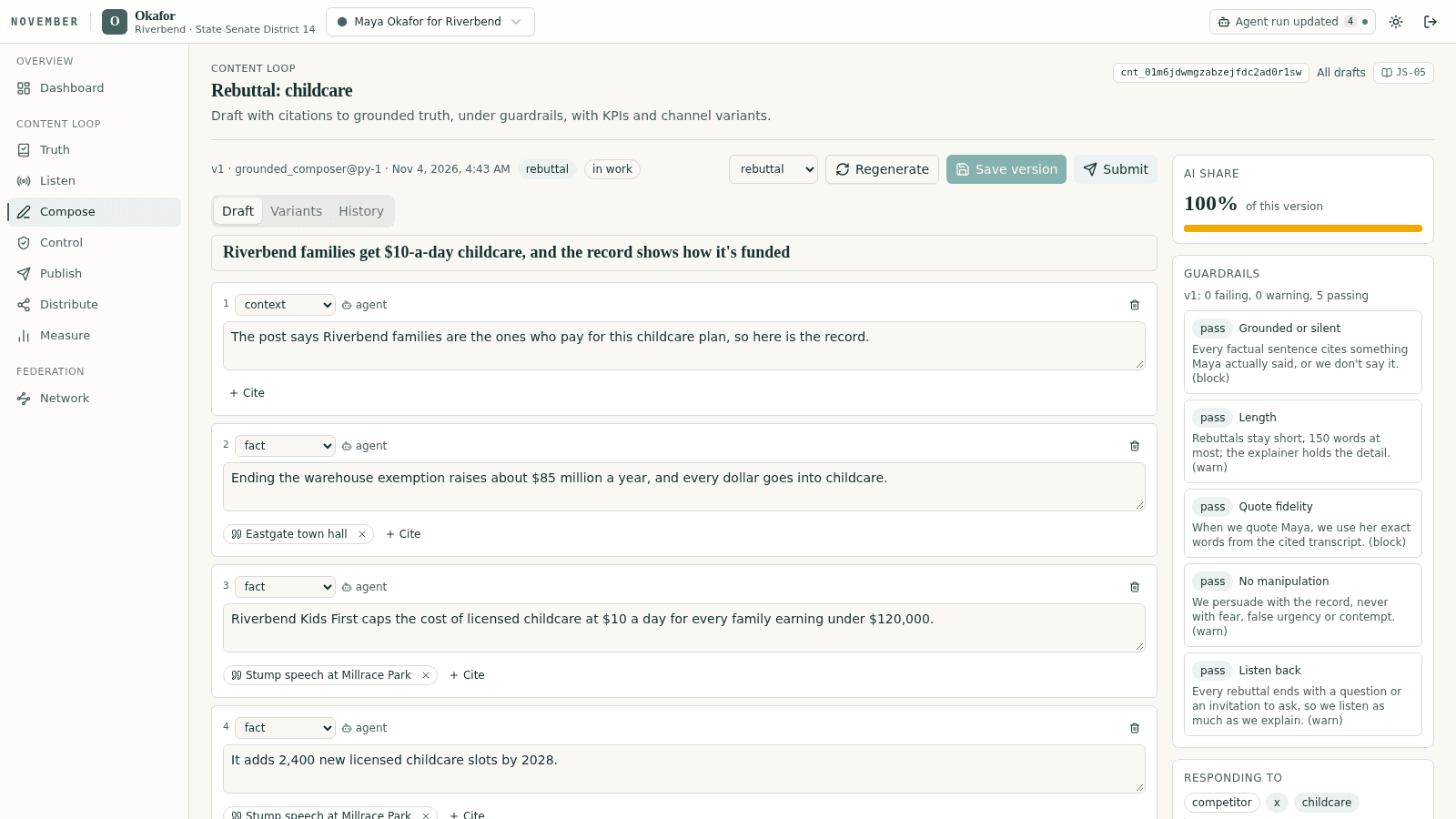
An agent drafts a reply in the candidate's voice in minutes. Every factual sentence cites her own words, and guardrails check it before anyone reads it.
Control
A person reviews the draft against the campaign's KPIs, each score with its reasons. Release takes a second approver, and every override is recorded.
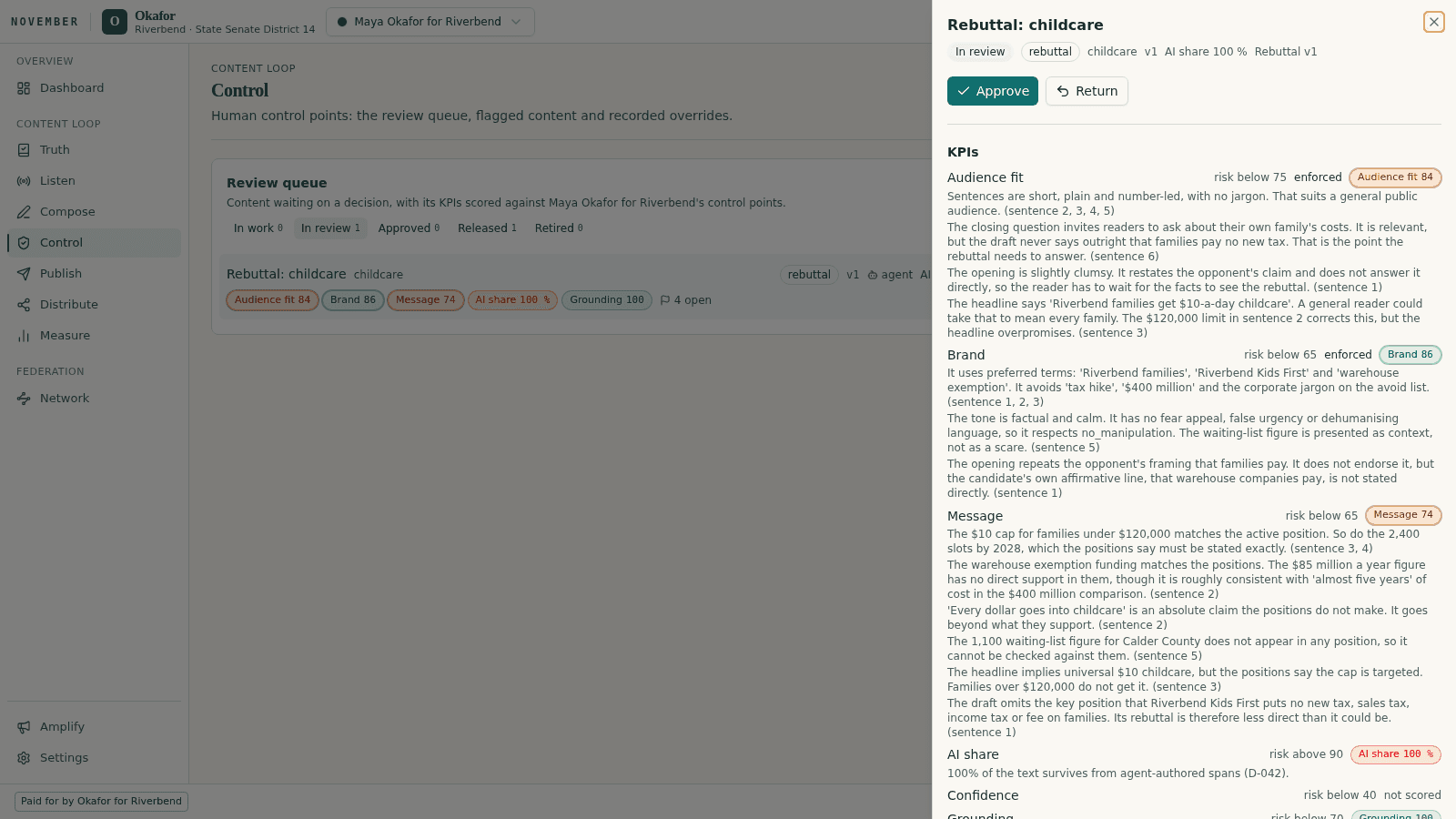
Publish
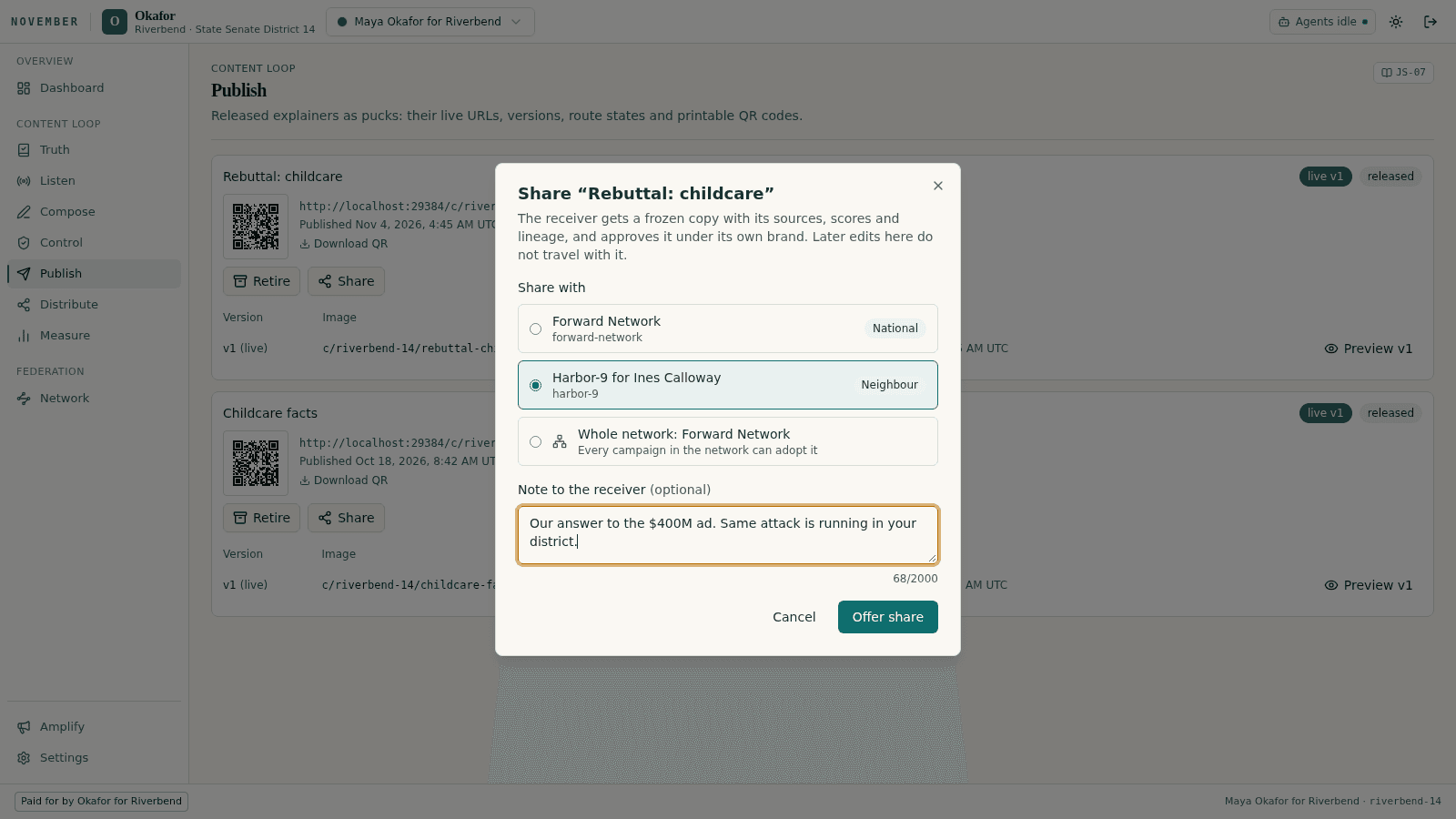
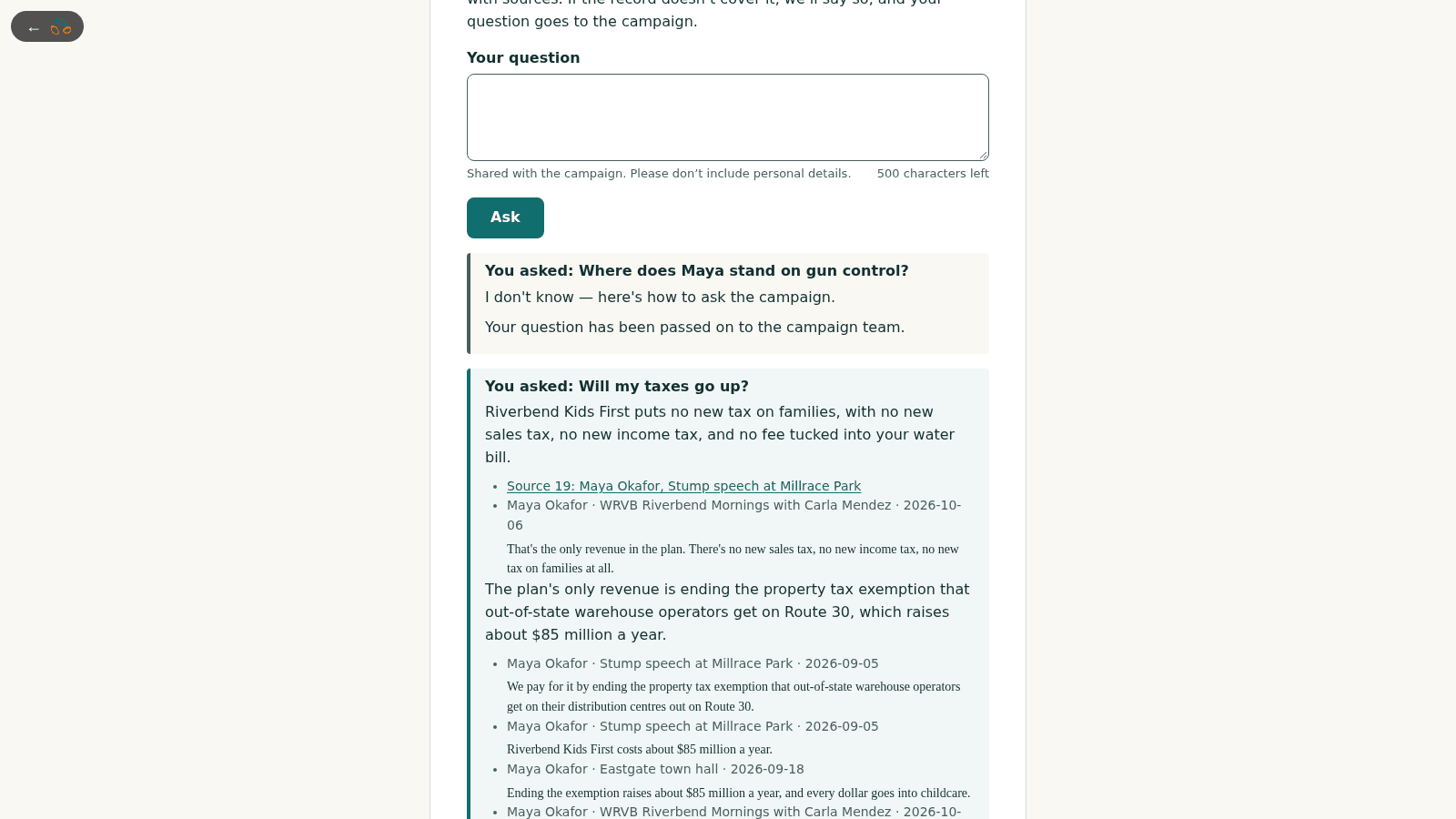
Approved content goes out as a versioned page with a QR code: an explainer a door-knocker can hand over, which answers questions only from the record.
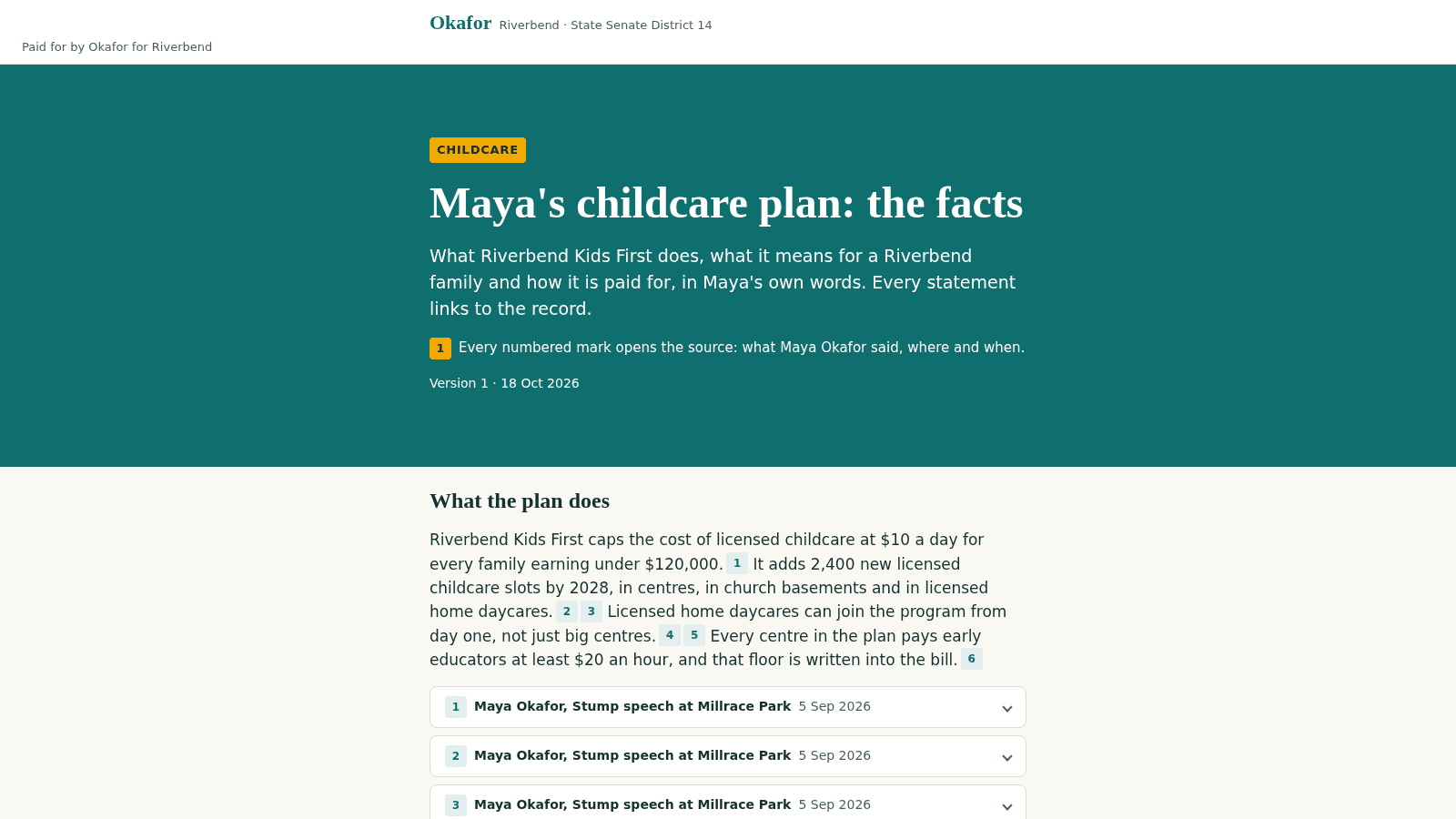
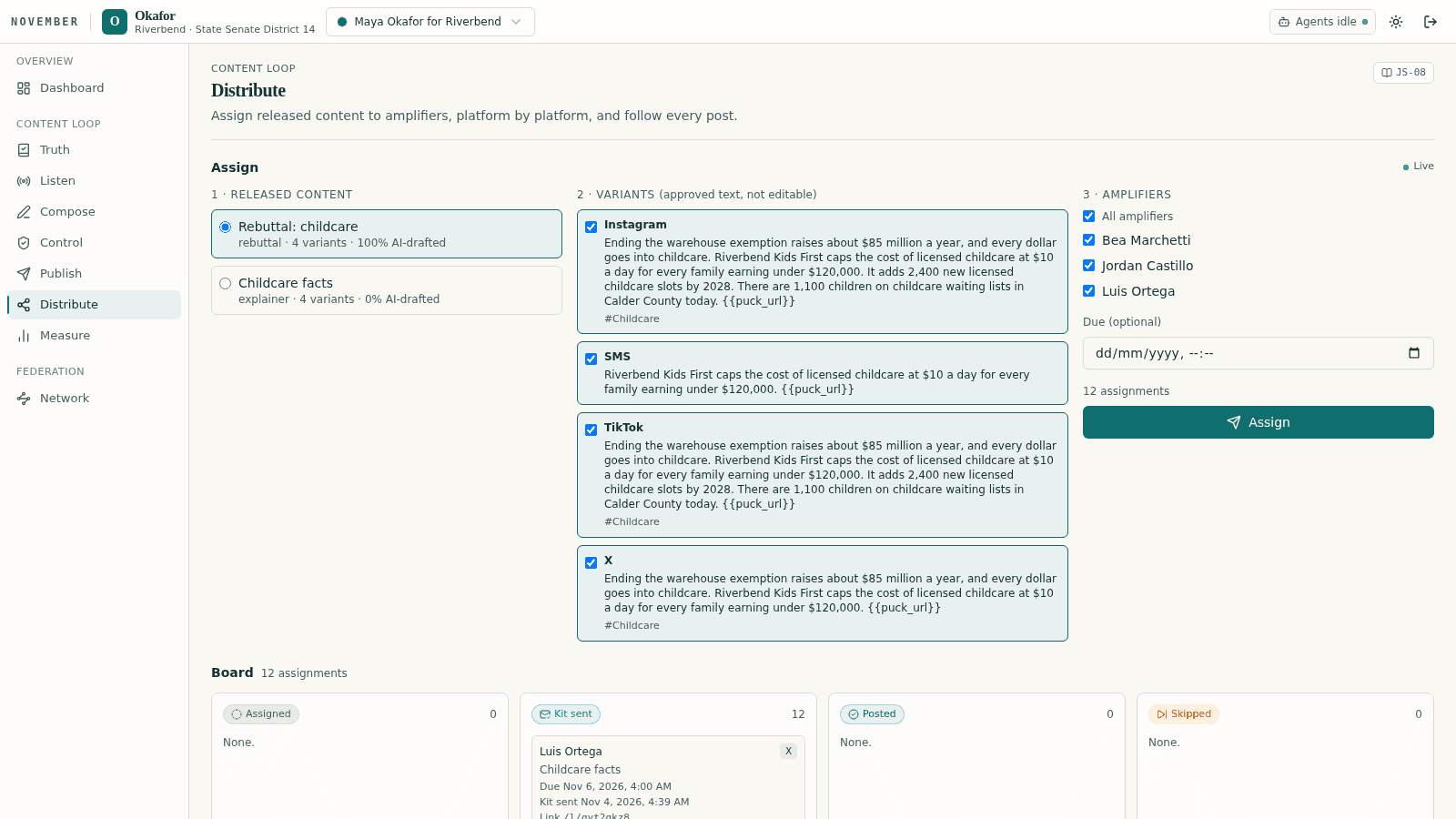
Distribute
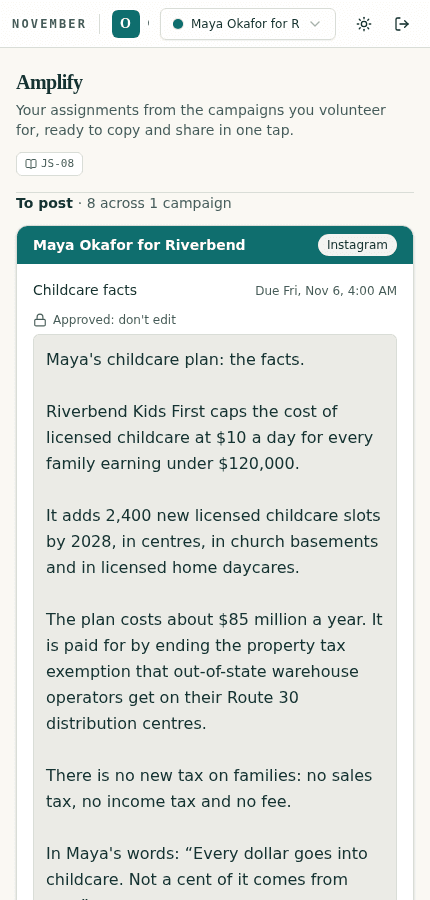
Volunteers get a kit for each platform: approved text, ready to copy and share in one tap.
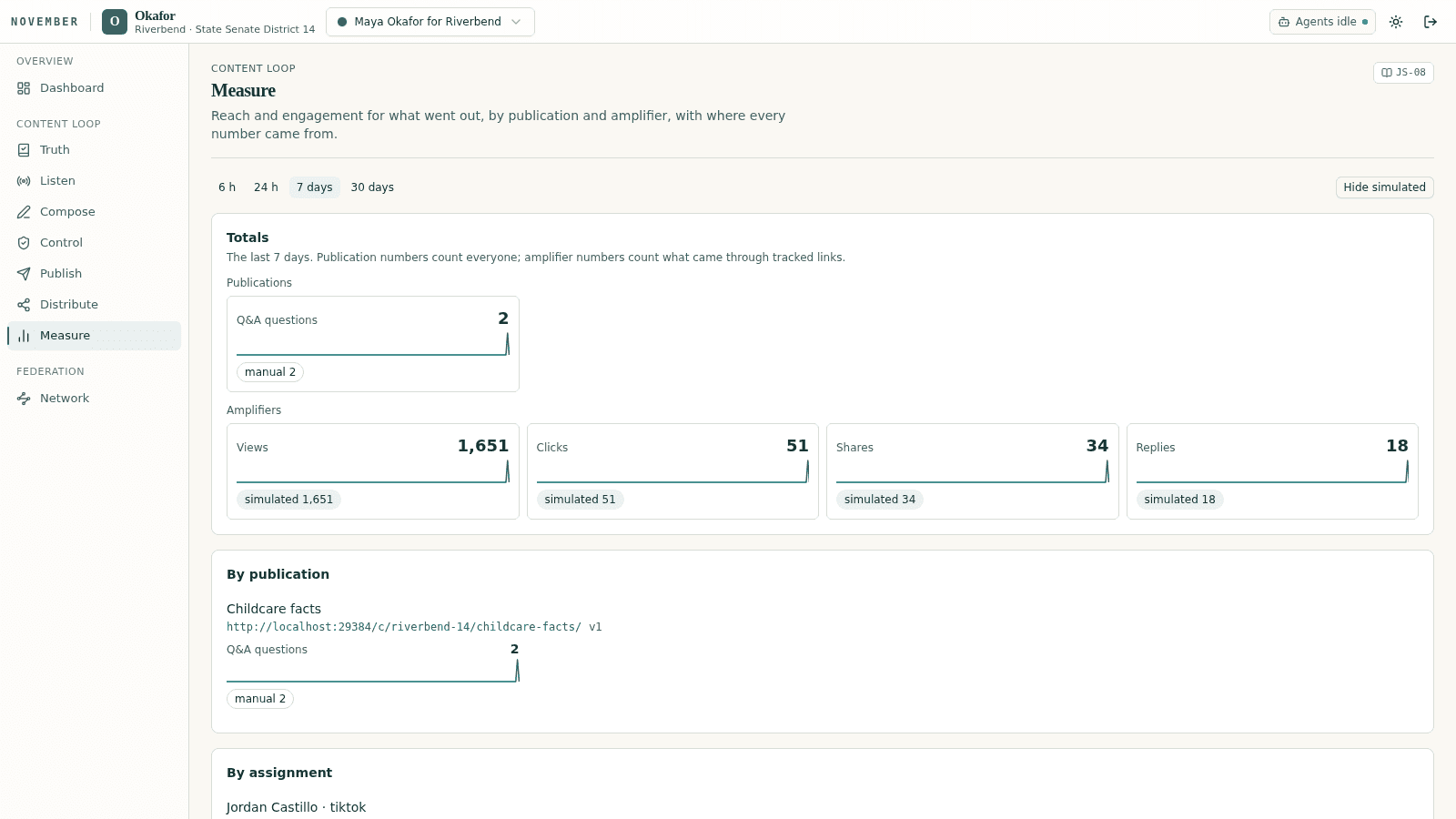
Measure
Reach and engagement per piece and per volunteer, each number marked with where it came from.
Federate
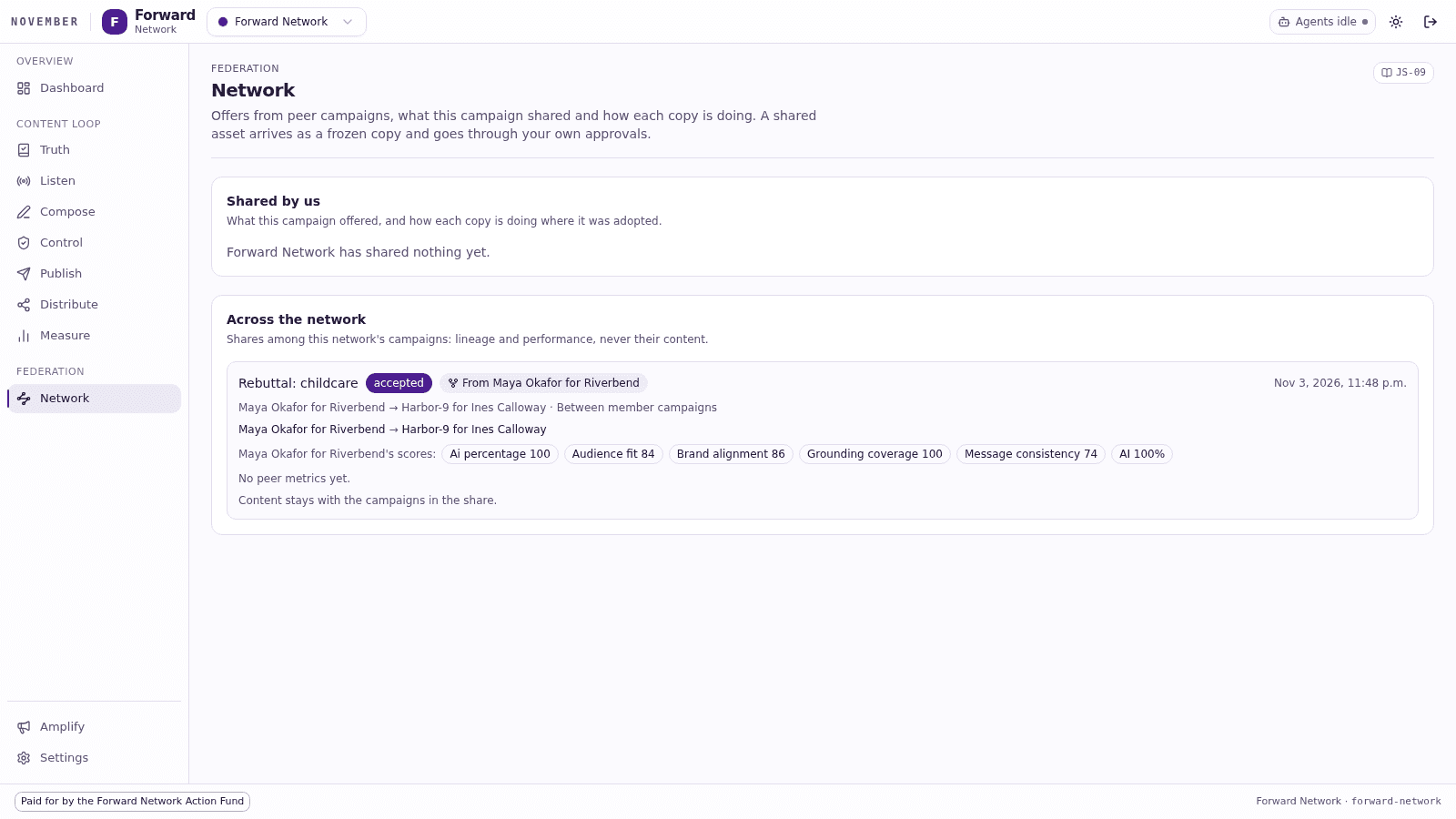
Share a finished piece with a campaign you trust. It arrives as a frozen copy with its sources and goes through their approvals, under their brand.
Who it is for
Everyone who speaks for the campaign, from the candidate to the volunteer at the door.
- Candidates
- Nothing goes out in your name that you did not say, and every line shows where you said it. Your words, not a paraphrase.
- Campaign managers
- One place to see what came in, what is being answered, who approved it and what it reached. The record of every decision is already kept.
- Communications directors
- A cited draft in the candidate's voice, checked against your message and brand before it reaches you. You approve it, return it or rewrite it.
- Field and volunteer leads
- Volunteers get approved posts and explainers they can share in one tap, and a page to show at the door that says “I don't know” rather than guess.
People decide. The record speaks.
november drafts quickly so people can decide carefully.
- Humans decide
- Agents read, draft and score. Only a person approves, releases or shares.
- Grounded or silent
- A factual sentence with no source in the candidate's record does not go out. Asked something the record does not cover, an explainer says so and passes the question to the campaign.
- Four eyes
- By default, release needs a second person. Overrides are allowed, named and kept.
- Every step recorded
- Who drafted, who scored, who approved and what changed, kept in an audit trail you can show.
Campaigns that trust each other, sharing
Each campaign stays sovereign. When one shares a grounded piece, the other adopts it through its own approvals, under its own brand. The network sees where a piece came from and how it scored, never its content.
See it work on a campaign
The demo is a working console for a fictional race. Sign in and follow one response from the candidate's record to a published, cited answer.